
Description
Circadian Blue-Light-Blocking Glasses: Benefits by Lens Color
(What science supports & how each shade affects sleep and circadian rhythm)
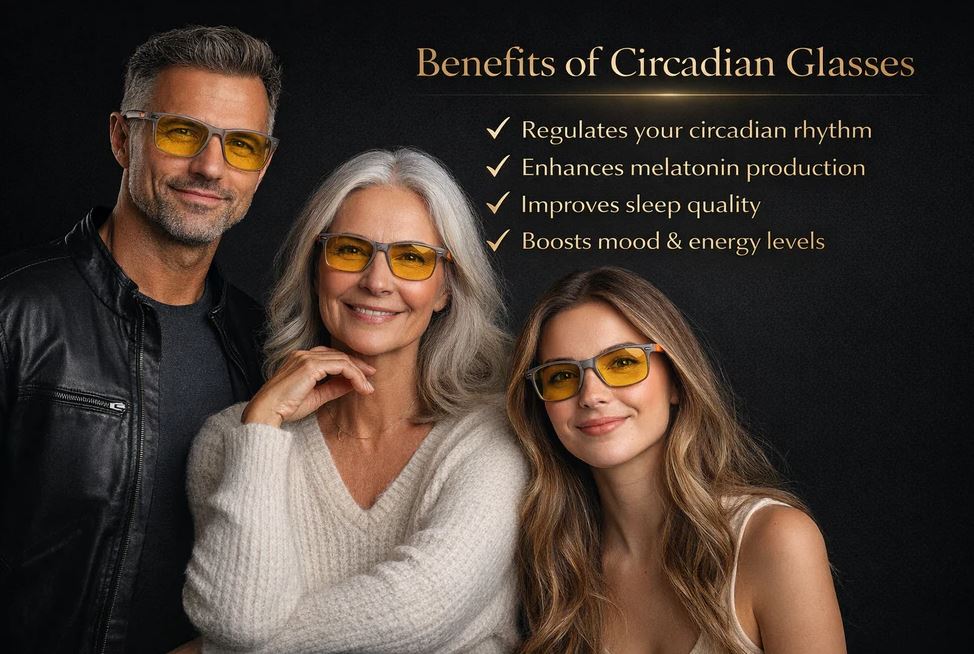
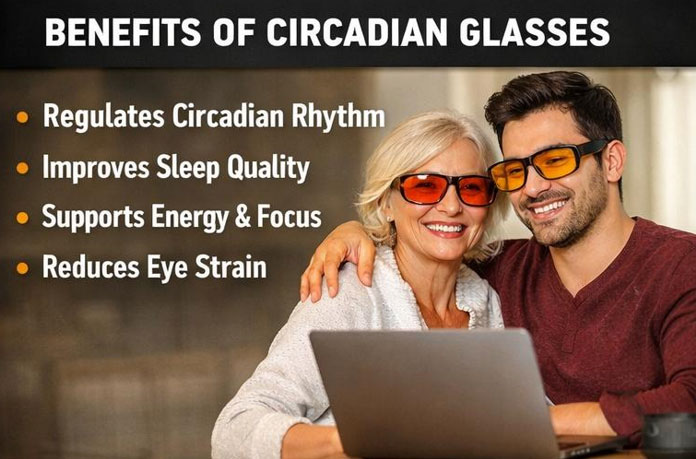
Circadian-focused blue-light-blocking glasses are designed to reduce exposure to wavelengths of light that interfere with your body’s natural sleep–wake cycle. Different lens colors block different amounts of blue (and sometimes green) light, leading to different physiological effects.
Why Blue Light Matters for Sleep & Circadian Rhythm
Blue light (approximately 450–480 nm) has a powerful effect on your circadian system because it suppresses melatonin, the hormone that signals nighttime to your brain.
Evening exposure to blue light from:
- Screens (phones, TVs, computers)
- LED lighting
- Bright indoor lighting
can:
- Delay melatonin release
- Push sleep onset later
- Disrupt circadian alignment
Reducing blue light exposure in the evening helps your brain recognize that night has begun, allowing your body to prepare for sleep more naturally.
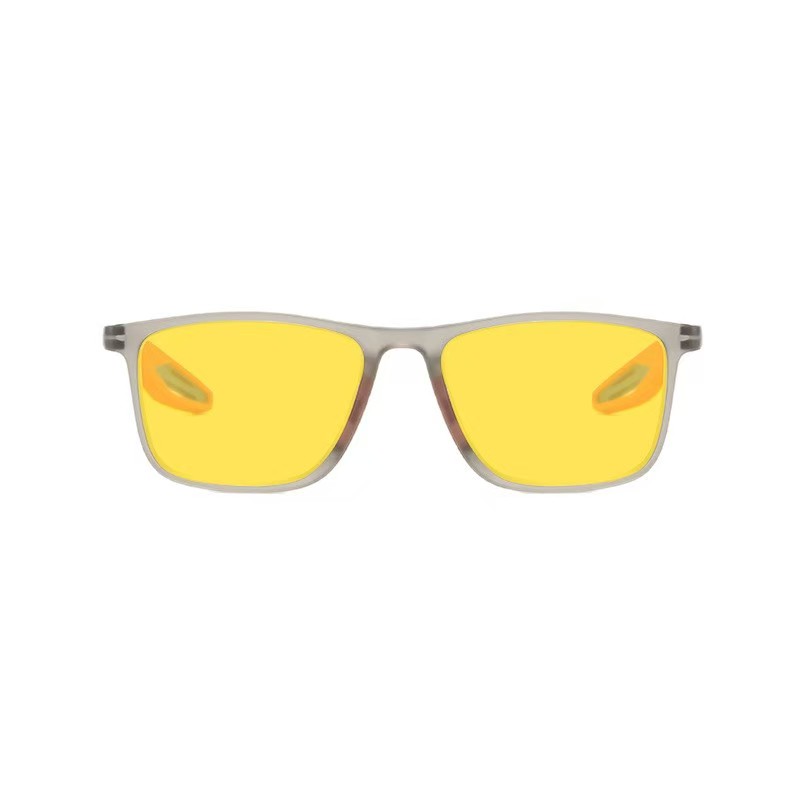
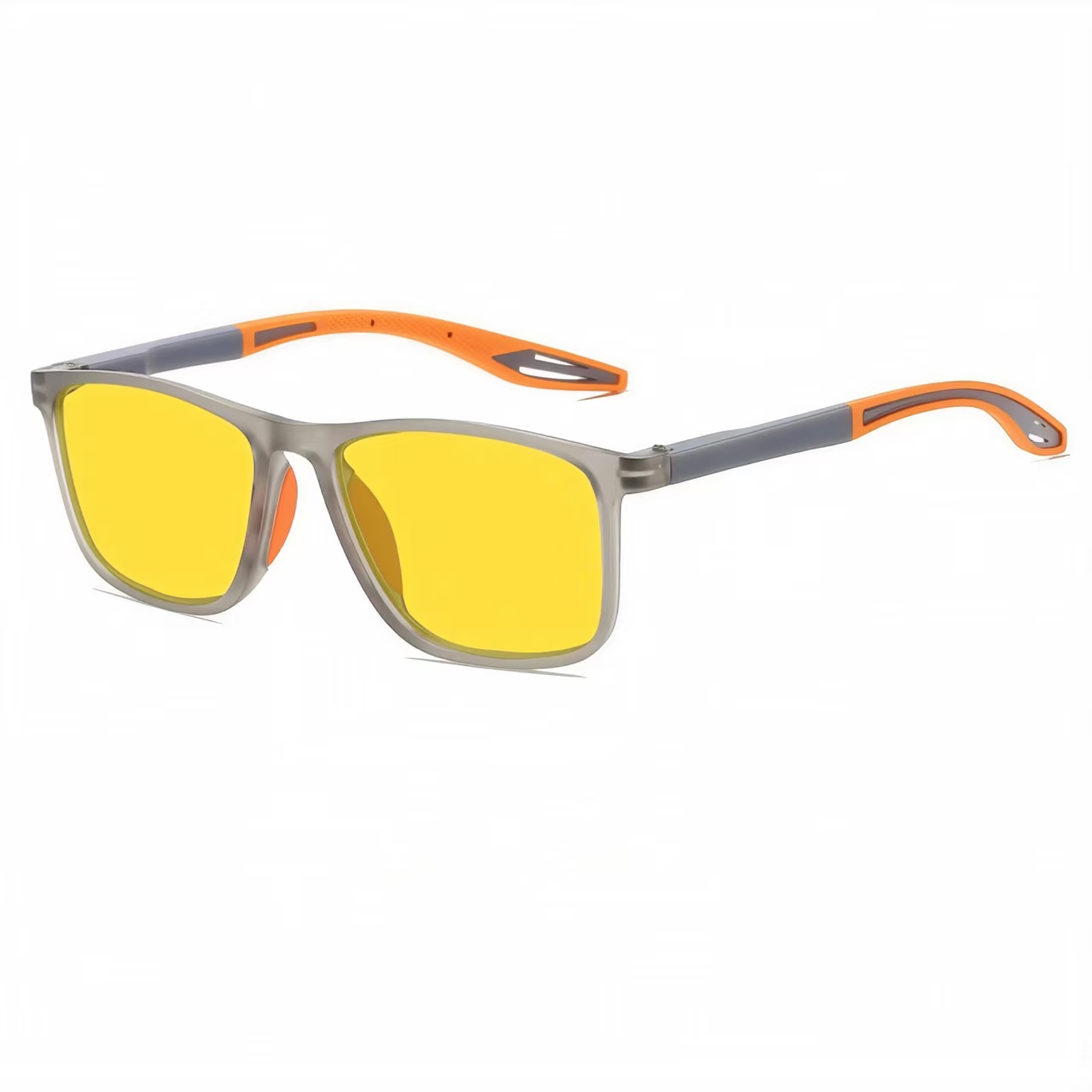
Yellow Lenses
What They Do
- Filter a moderate amount of blue light
- Preserve most natural color perception
- Often used during daytime or early evening
Key Benefits
- Visual comfort: Reduce glare and eye strain from screens and LED lighting. Benefits are mostly subjective (comfort rather than hormonal).
- Mild circadian support: Slightly reduces evening melatonin suppression compared to no filtering. Effects are modest compared to darker lenses
- Minimal color distortion: Colors remain mostly accurate, making them practical for work or daytime use
Best For
- Daytime screen use
- Offices with harsh LED lighting
- Early evening when you want light filtering without signaling “full nighttime” to your brain
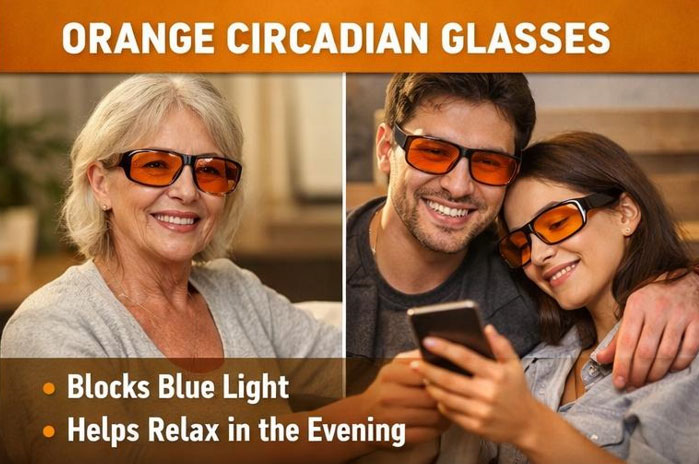
Orange Lenses
What They Do
- Block a large percentage of blue light (often up to ~90–95% of circadian-relevant wavelengths)
- Strongly reduce light that suppresses melatonin
Key Benefits
Sleep & Circadian Regulation
- Preserve melatonin production in the evening
- Earlier sleep onset in some individuals
- Clearer circadian signal that nighttime has started
- Improved subjective sleep quality and fewer nighttime awakenings in some studies (objective results vary)
Mental Wind-Down
- Reduced blue-light-driven alertness
- Helps the nervous system shift into a calmer, pre-sleep state
Best For
- Screen use 2–3 hours before bedtime
- Evening indoor lighting
- People looking for meaningful circadian support without extreme color distortion
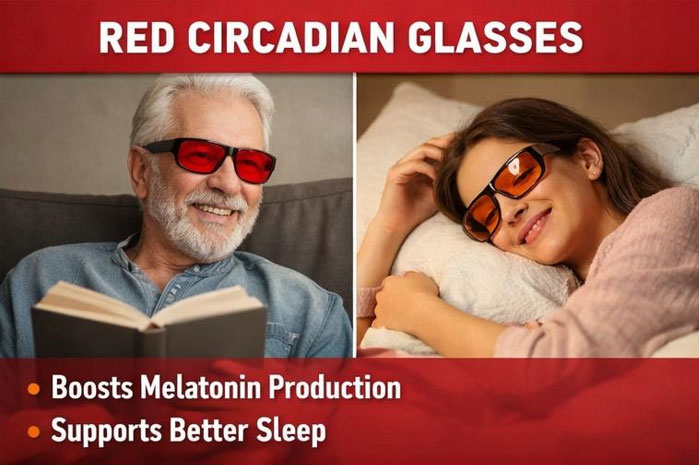
Red Lenses
What They Do
- Block nearly all blue light and a significant amount of green light
- Provide the strongest circadian protection available in glasses form
Key Benefits
Maximum Melatonin Preservation
- Keeps melatonin production almost completely unsuppressed at night
- Useful when you want the strongest possible “nighttime” signal
Strong Circadian Support
- May be especially helpful for:
- Shift workers
- Jet lag recovery
- Severe sleep disruption
- High light sensitivity
- Eliminates most stimulating wavelengths that interfere with circadian timing
Trade-Offs
- Significant color distortion (everything appears red or dark)
Typically used only in:
- Dim environments
- The last hour before sleep
- Specialized circadian or sleep protocols
What Research Actually Shows
Sleep & Melatonin
Multiple studies suggest that wearing orange or red blue-blocking glasses in the evening:
- Shifts melatonin onset earlier
- Improves subjective sleep quality
- Makes falling asleep easier for some people
- Effects vary between individuals, and subjective improvements are more consistent than objective sleep-lab measurements